Why Men Keep Writing the Manic Pixie Dream Girl
sugar, spice and all things nice.


Picture this. It’s 2025.
You’re tired in a way that doesn’t look dramatic from the outside, but still dictates your week. You meet someone who seems oddly relieved to be around you. They call you refreshing. They say you make life feel lighter, start romanticising your eccentricities with an eagerness that’s flattering at first, until it starts to feel less like being seen, and more like being cast.
Because eventually you realise you’ve been recruited into a role. Your job is to be buoyant, forgiving, sexually available in a charming way, perceptive without becoming complicated, and permanently grateful for their attention. The moment you ask for steadiness, the moment you stop being “fun” and start being a person with needs, the atmosphere changes. It begins to feel uncomfortably close to abandonment, except it is presented in polite language of “timing,” “I’m not ready,” and the pièce de résistance,“you deserve someone better.”
That is the manic pixie dream girl dynamic in real life, and she isn’t merely a “type,” but a loophole. A woman dated and desired as a remedy, then resented the minute she requires care of her own.
The manic pixie dream girl is a particular kind of female character who keeps turning up in film with the same familiar lighting around her, as if she has been engineered to glow in a way no real person is permitted to sustain. She is lively, a little eccentric, disarmingly pretty, and inexplicably devoted to a man whose personality is, at best, present. She arrives at the point in his life where he has decided everything is numb, meaningless, or unfair, and she behaves as narrative intervention, someone to pull him back into the world without ever asking him to become emotionally competent in return.
People call her a type, as if she is simply one flavour of woman among many, I have never experienced her that way. She reads to me as convenience, an exemption written into the story, where a man gets devotion, softness, novelty, forgiveness, and erotic attention without earning any of it through sustained care. She is lively enough to redeem him, pliable enough not to demand much, and “unwell” only in ways that remain aesthetically pleasing and narratively useful.
The term attached itself to culture so quickly because it described something women already recognised, on screens and in dating. It was not only a complaint about a fictional trope; it was a description of a dynamic, the eroticisation of a very specific female instability, provided it remains light enough to be charming and organised in a manner that is convenient.
And if you are a woman watching this happen, the strange part is that you are not only competing with other women, or with whatever the current beauty standards are. You are competing with a fictional template: a girl engineered to be emotionally useful, aesthetically interesting, and permanently undemanding. You cannot outperform a character who was written without needs.
The “ethereal girl” as a blueprint
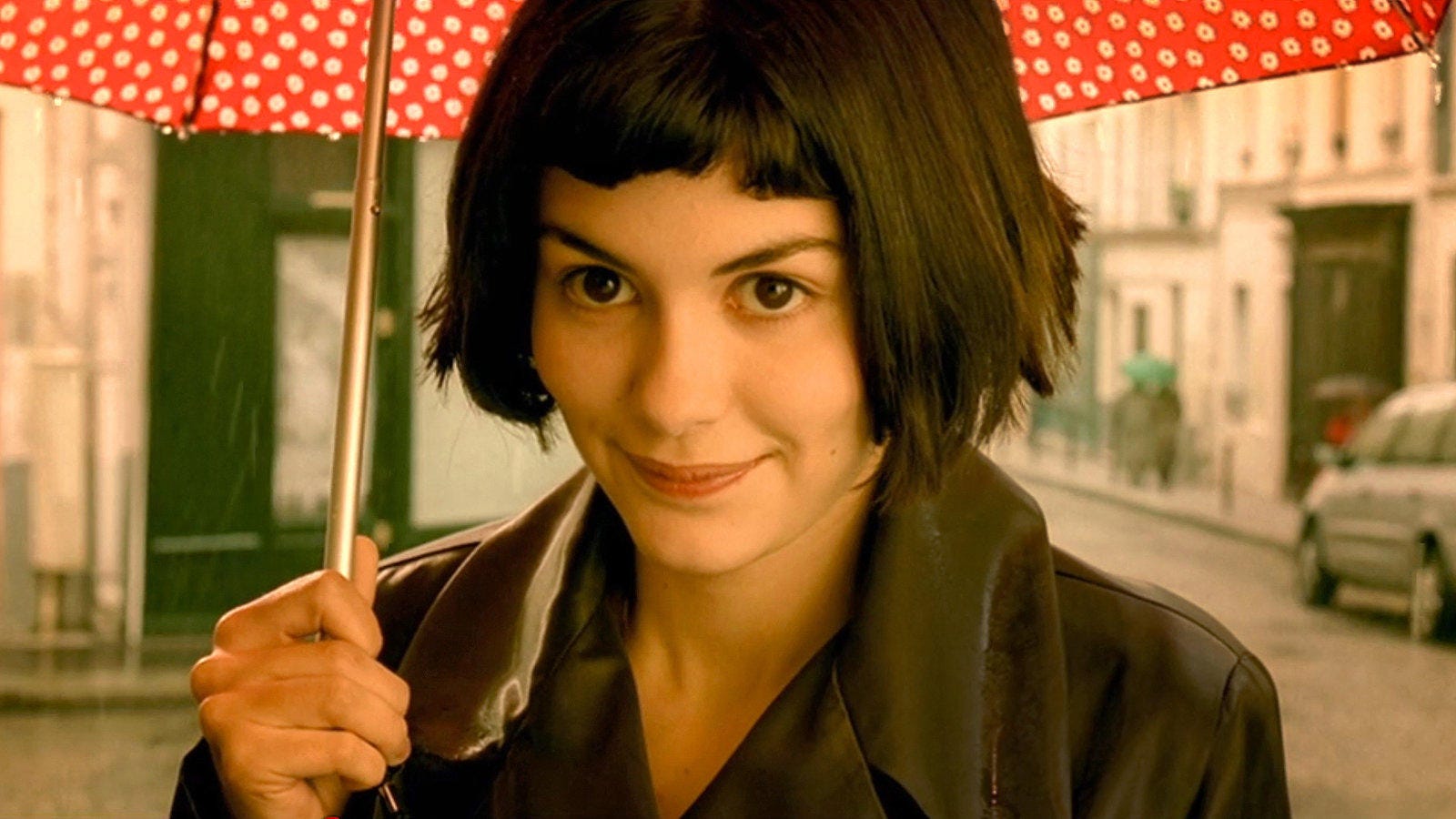
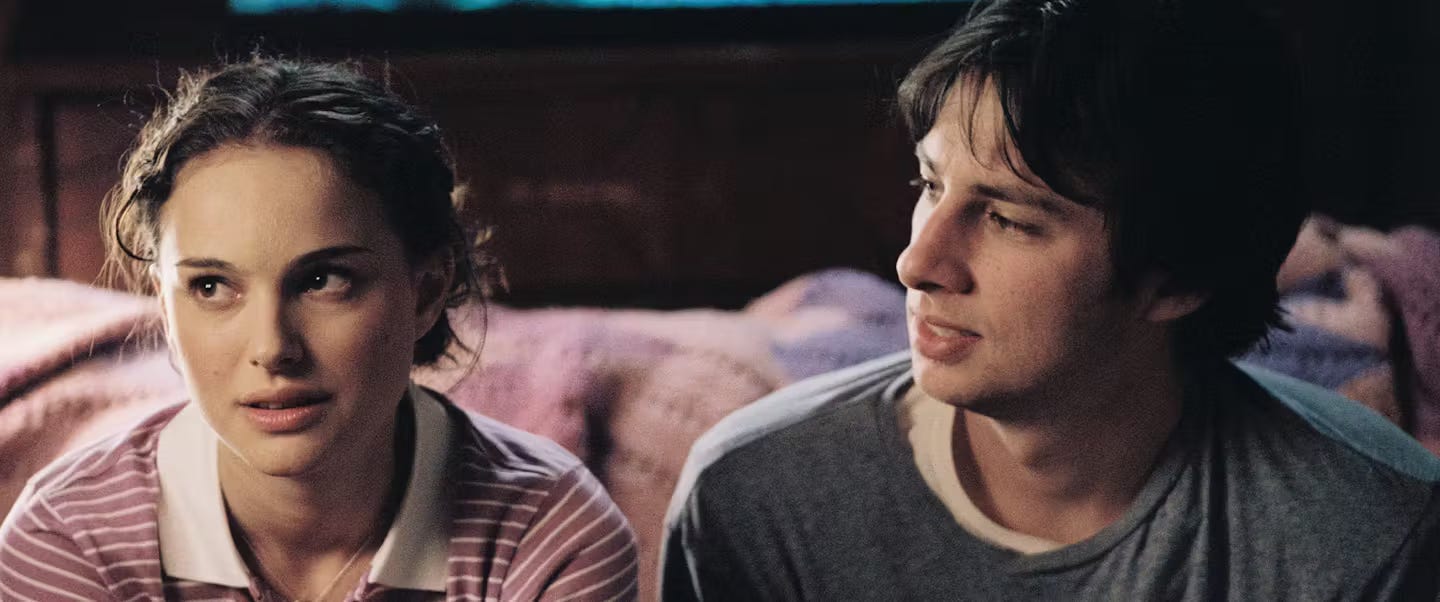
I can remember when this template started to feel personal. I was at that formative age where you absorb films as social instruction even when you don’t mean to. For me it was Amélie, and then 500 Days of Summer, both for very different reasons, yet somehow similar in many ways. Those films were presented with such confidence that they felt, in retrospect, like a guide, not simply to romance, but to what kind of woman men felt entitled to want.
In 500 Days of Summer, Summer is framed as a kind of ideal. She is tasteful, quirky, interesting, not overtly sexual in a way that threatens male comfort, not intellectually intimidating, but still possessing that elusive “something” that makes her feel otherworldly. She is aestheticised as a goalpost. Even the costuming participates by way of the cinematic softness, the vintage references, and the composed prettiness that come across as effortless.
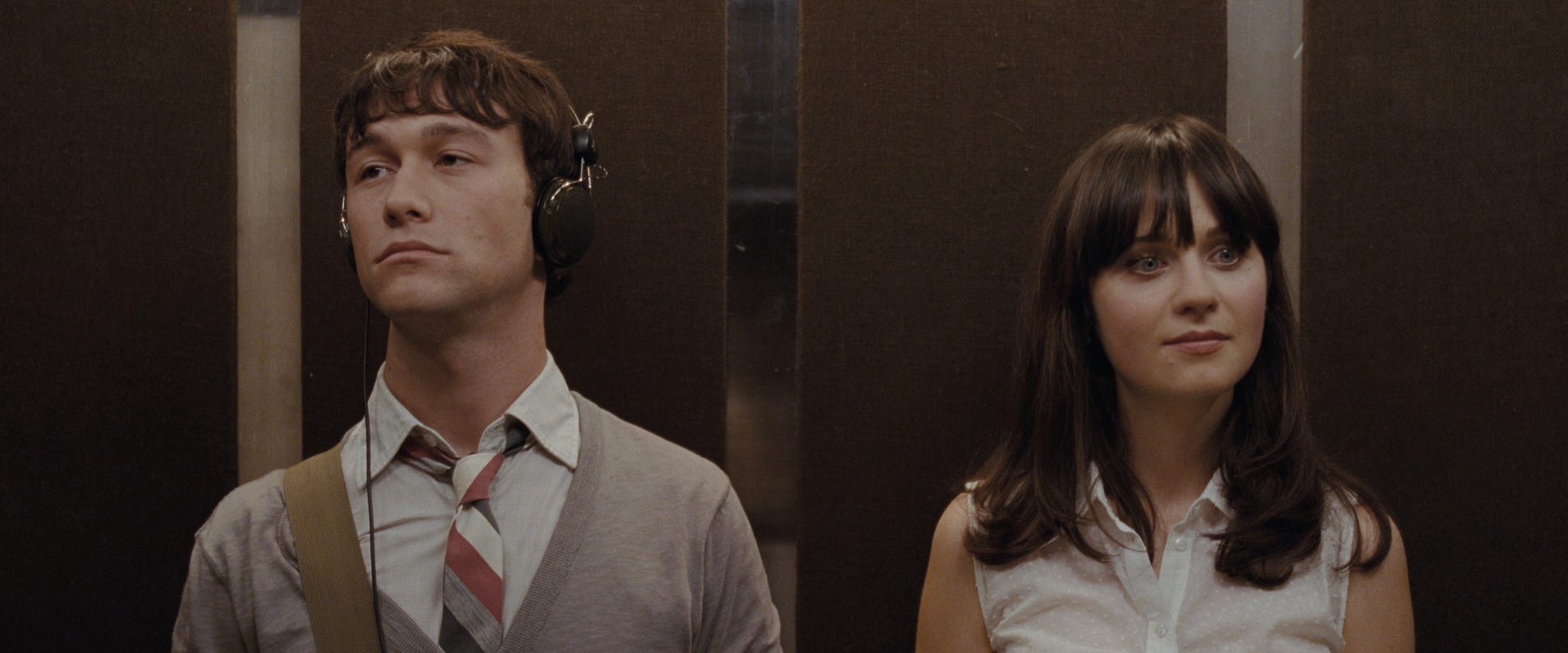
A girl like that does not only operate as a love interest. She becomes a cultural mood-board for “desirable womanhood” with enough personality to be charming, enough mystique to be chased, enough distance to be projected onto. She becomes a template that real women start referencing, sometimes consciously, but oftentimes without realising it, because the reward is obvious. When a certain kind of man encounters a woman who reads as this archetype, he reacts as if he has found something rare, and he behaves as if her existence is an offer.
The loophole at the centre of it
The manic pixie dream girl is often described as “whimsical,” but whimsy is the least important detail. The important detail is what she accepts.
She permits a man to remain emotionally underdeveloped while still receiving the experience of intimacy. He gets to be passive while she generates momentum. He gets to be self-absorbed while she frames that self-absorption as depth. She becomes the device that allows him to remain the protagonist without doing the work of becoming someone other people can actually live with.
In other words, she is emotional labour given a personality.
She is not simply just a character; she is a fantasy of relational asymmetry. She is what male romantic entitlement looks like when it learns to speak in an indie voice.
This is the part people glide past because it makes the trope harder to keep romantic. The manic pixie dream girl is built out of traits that, in real life, are not consistently cute.
A person who is spontaneously impulsive, intensely emotive, socially unguarded, highly sensory, novelty-seeking, and unusually trusting can look magical in a two hour film. But In real life, those traits have consequences, they come with overstimulation, difficulty with boundaries, vulnerability to manipulation, and the exhausting task of managing other people’s projections.
What I can’t help but notice is that the culture doesn’t romanticise female instability in general. It romanticises a particular presentation of it, one that remains pretty, coherent, and entertaining. It does not want the unglamorous reality of mental health, just the aesthetic of it.
And so the people who ‘love’ this archetype often vanish the moment the traits stop being useful to them. When she stops being charming and becomes complex; when she stops being buoyant and becomes tired; when her body and mind stop being an accessory, suddenly the devotion evaporates, you see what was actually happening, that she was being consumed as an experience, not regarded as a whole person.
The racial coding people pretend not to see
Here’s what needs to be said plainly, the manic pixie dream girl, in her most recognisable mainstream form, is overwhelmingly white.
That is not because only white women are quirky. It is because ethereal is not a neutral descriptor in Western media. The word has a history, and it has a look that says paleness, delicacy, a certain kind of fragility that reads as safe, artistic, and non-threatening. When women of colour display the same intensity, eccentricity, spontaneity, or emotion, they are more readily depicted as “too much,” “chaotic,” “difficult,” “messy,” or simply not afforded the same romantic framing.
So part of what I believe women are reacting to when they talk about this trope is not only the gendered demand, but the racial hierarchy inside the demand of who gets to be dreamy, and who gets punished for behaving the same way.
The girl who becomes a myth without consenting
I have a friend who is genuinely the closest thing I have ever seen to the human version of this trope. The first time I met her I remember thinking very bluntly that she looks like Audrey Hepburn. Petite, Italian, soft-featured, a tiny voice, and an eccentricity that does not feel performed. It is simply how she moves through the world.
And the men around her did what I’ve watched happen to certain women over and over again, they turned her into a myth she never consented to.They did not respond to her as a whole person with a private self, complicated motives, and ordinary needs. They treated her as an artefact, and romanticised her in ways that were loud and possessive. They spoke about her as if she belonged to a category of girl they “deserved” because they noticed her first, wanted her harder, or believed they understood her better than other people did.
And because she is gentle-natured and socially yielding, because she dislikes conflict, and struggles to say no, she became easier to push. Not easier to love, easier to push.
This is the part of the dynamic that is rarely discussed, the dream girl is often a woman with porous boundaries. People sense that, and they take advantage of it. They apply pressure with charm, intensity, guilt, and the implied threat of withdrawal. If she gives in, it gets called romance. If she resists, she gets called confusing.
Over time, that attention bends you. It changes what you think you owe people. It changes how easily you trust your own reluctance. It can turn intimacy into something you endure in order to preserve the story other people have written about you. And what is always so bleakly predictable is that when that woman begins dealing with the non-aesthetic side of herself, when her mental health is no longer romantic, when her life requires steadiness rather than sparkle, the men who were once theatrical in their desire become absent. They are no longer there because what they wanted was never her wellbeing. What they wanted was the feeling she gave them.
Why women end up trying to perform it
The reason this trope is more than film criticism is that it finds its way into dating culture as a standard women learn to manage.
Some women perform a softened version of it because they can feel, very quickly, how rewarded it is. Being “fun” is safer than being angry. Being “easygoing” is safer than having expectations. Being “interesting” is safer than being honest about your needs. Being the girl who asks for little is often treated as a sign of moral superiority, when it is frequently a sign of conditioning.
It becomes behavioural economics, the less you demand, the more adored you seem.
But the cost is brutal, because you end up in relationships where your personhood is secondary to your compatibility. You are loved for what you provide, not for what you are. You are praised for your lightness, which could result to you being punished for your reality.
If I take a step back, I think the manic pixie dream girl sells so well because she solves several cultural problems at once.
She solves male fear of responsibility by making devotion feel consequence-free. That male fear of female desire by making sexuality feel playful rather than agentic.The male fear of complex women by giving him a woman who is layered enough to be fascinating, but never layered enough to require sustained reciprocity.
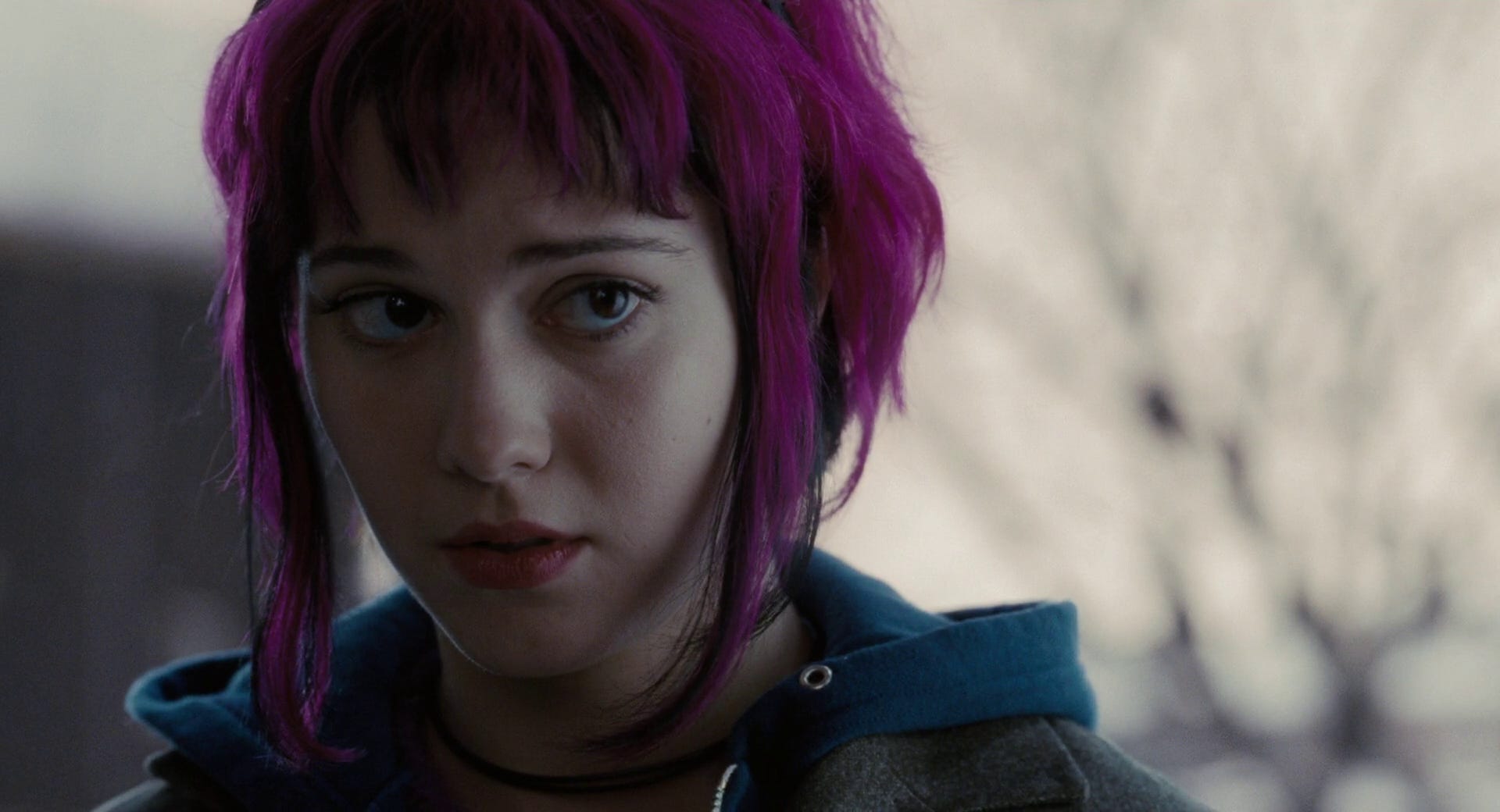
And she gives the audience a romance that feels meaningful without having to depict the boring, difficult, grown-up work that meaningful relationships actually require: accountability, repair, consistency, and mutual care.
So many women feel a kind of private fury when they encounter her, I don’t believe it’s jealousy of a fictional girl, but rather the feeling of being measured against a rigged standard. one designed so that you can never win unless you agree to
disappear.
Because the manic pixie dream girl is, at her core, a disappearing act sold as charm.
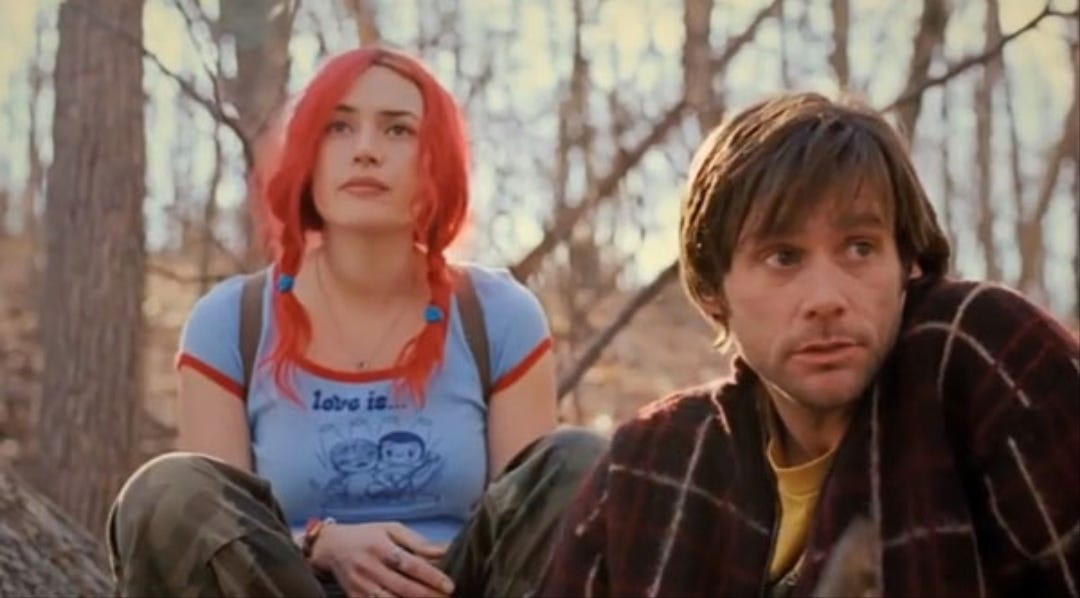
The MPDG is a male fantasy, but she’s no worse than the billionaires with Greek God bodies who are never at their company or the gym because they spend their lives fussing over a girl.
People like their wish-fulfilment.
You know who came to mind immediately? Brittany Murphy.
And then, without any irony, me. Word for word, me.